Skip to content

Strength-training shorts may look straightforward, but a pair that fits well while standing can pull across the thighs during a deep squat or shift at the waist during a deadlift. If brands approve samples only by appearance, those problems can become part of the entire production run.
To develop men's gym shorts for strength training, brands should define the lifts the garment must support, refine the hip, rise, crotch and leg-opening measurements, choose fabric for stretch and recovery, and test waistband stability during movement. Review pockets, liners and seams for interference. Then approve a documented physical sample and finished-garment specifications before releasing bulk production.
From our perspective as a custom men's gym shorts manufacturer, the starting point is not a fashionable inseam. It is the movement the shorts must accommodate.
Why Do Strength Training Shorts Need a Different Design Approach?
Strength training is a substantial part of mainstream gym activity. The Health & Fitness Association's 2026 report says 81 million Americans held fitness facility memberships in 2025, while free-weight use grew faster than any other equipment category since 2021. That is a participation signal, not a direct estimate of shorts sales.
How does weightlifting affect shorts fit?
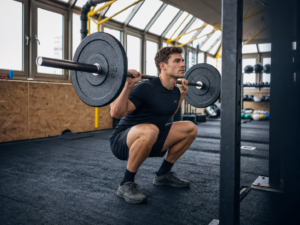
A squat combines deep hip and knee flexion; a deadlift or Romanian deadlift changes the angle between the torso and thighs; lunges create asymmetric loading and movement. These motions expose restrictions invisible in standing photos.
“Too tight” might mean insufficient thigh width, back rise, crotch allowance or stretch. Define whether the shorts are meant for general gym sessions, bodybuilding, or barbell-focused workouts, because those audiences may prefer different coverage and silhouettes. Adjust the observed problem, not a guess.
How Should Brands Design the Pattern for Squats and Deadlifts?
Check hip, thigh and crotch allowance together
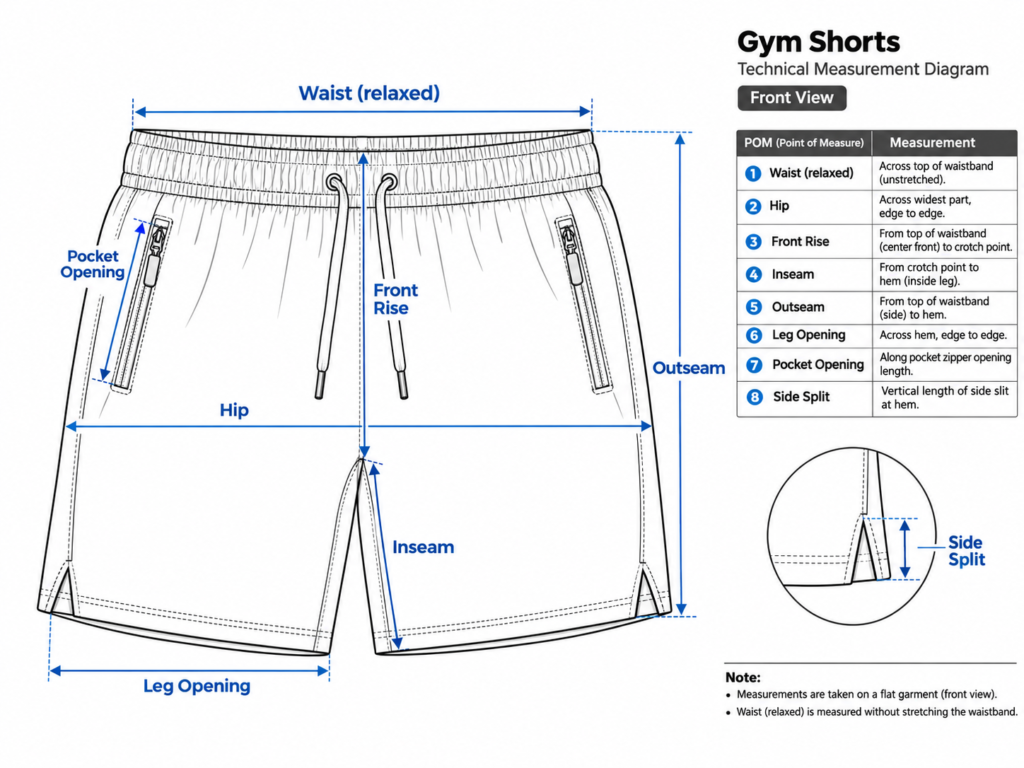
For a men's training-short pattern, we would review the finished hip width, thigh width at a defined point, front and back rise, and the crotch seam's shape. These measurements interact. Adding leg width alone may not resolve pulling across the seat during a deep squat.
Watch the strain lines: crotch tension and upper-thigh pulling may require different adjustments. Recheck movement before revising the pattern.
Aim for mobility without twisting or bunching; oversized does not always mean better.
Understand inseam and leg opening as a pair
A 5-inch inseam and a 7-inch inseam describe length, not freedom of movement. A shorter short with a narrow leg opening can still catch on the thigh. A slightly longer design with adequate opening and appropriate stretch may move more comfortably.
Test each length instead of simply shortening an approved pattern. Side slits can improve the opening in some designs, but slit height, seam reinforcement and appearance must be evaluated together.
Does a gusseted crotch always help?
A gusset is an inserted fabric panel at the crotch. It can alter seam placement and create movement allowance, particularly where repeated stretching is expected. However, it adds pattern pieces and sewing operations, and its benefit depends on dimensions, fabric and the surrounding pattern.
A well-drafted conventional crotch may work just as well. Use a gusset to solve a documented problem.
[IMAGE 01 — Insert a clear original front/back men's gym shorts technical illustration identifying hip, thigh, front/back rise, inseam, leg opening, side slit and optional gusset. No customer branding.]
Caption: Pattern measurements work together; inseam alone does not determine squat mobility.
Which Fabrics Perform Best During Strength Training?
Stretch is important, but recovery is just as important
A polyester–elastane or nylon–elastane fabric may offer comfortable movement, but the fiber percentages alone do not specify performance. Stretch direction, fabric structure, finishing and recovery all matter. A material that extends readily but stays distorted can make the leg openings or seat look loose after repeated lifting.
Compare swatches after repeated extension, not one pull by hand. For appropriate woven stretch fabrics, methods such as ASTM D3107 address stretch, growth and recovery under defined conditions. Agree on pass criteria; no standard defines the perfect lifting short.
Choose fabric by the design, not the fiber name
Polyester blends can offer practical lightweight woven options; nylon blends may provide a different hand feel. Neither fiber is universally more durable or more suitable for strength training. Check squat opacity, abrasion, recovery, fabric noise and care.
GSM measures fabric weight, not quality. Heavier is not necessarily stronger, and lighter is not always more breathable.
How Should Waistbands, Pockets and Liners Be Designed?
Keep the waistband stable through a hip hinge
A waistband must stay secure without digging in. Check elastic recovery, casing, drawcord position and whether it rolls during a squat.
Measure the waist both relaxed and, where relevant, stretched. Label the measurement method clearly on the size chart. A comfortable standing fit is not enough to approve stability.
Put storage features where they do not interfere
A loaded pocket may press into the thigh during lunges. Check pocket depth, zipper ends and position during squats. If the pocket is zippered, test it with a phone or similarly sized object, not only when empty. Its weight and movement can change the wearer’s experience.
Simpler pockets may work better when storage is not essential.
Liner or linerless?
A compression liner changes support and fit; linerless shorts accommodate separate base layers. Neither is always better.
Test the liner opening, seams and two-layer movement. For a deeper comparison, see our guide to hybrid training shorts.
How Can Brands Test Strength Training Shorts Before Bulk Production?
Use a repeatable wear-test routine
Start with a sample in the intended fabric and size. With normal training base layers, test bodyweight squats, unloaded hip hinges, lunges and seated positions before loaded lifting. Judge the garment, not the lifter's performance. Use appropriate coaching and normal gym safety procedures.
Look for waistband rolling, rising hems, crotch pull, seam strain, pocket pressure and transparency. Use the same movements and observation points on revised samples so improvements are comparable. A short video can help the pattern team locate the issue, but it should be paired with written measurements and comments.
Strength Training Shorts Wear-Test Matrix
| Movement | What to observe | What the factory may need to review |
|---|---|---|
| Deep squat | Thigh restriction, riding hem, seat tension | Hip and thigh allowance, leg opening, crotch shape |
| Hip hinge | Waist slipping, back-rise tension | Back rise, waistband construction, pattern balance |
| Forward lunge | Uneven pull, restricted stride | Thigh width, side seam, slit design |
| Seated position | Pressure from zipper or pocket | Pocket position, hardware, waistband |
| Repeated movements | Bagging, twisting, need for readjustment | Stretch recovery, grain direction, elastic stability |
This is a practical sample-review template, not a standardized laboratory test or a claim that any particular Maida product has passed it.
Turn each complaint into a controlled change
A useful test note is specific: “During the third deep squat, the left leg opening rode up and remained caught on the upper thigh.” Record tester size, sample version, activity and proposed change.
Where practical, change one variable at a time and retest; otherwise, you may not know what solved the issue.
Test more than one body shape
One medium sample cannot validate all sizes. Test different body proportions and review graded sizes. Larger sizes may need more thigh and seat allowance rather than uniform increases in every measurement; evaluate the actual target fit before changing the grade rules.
Caption: Movement testing can reveal restrictions not visible in standing product photographs.
How Should Brands Convert Test Feedback into Production Specifications?
After wear testing, update the tech pack with finished-garment points of measure, grading, fabric reference, seam construction, waistband details and any revised pocket or liner specification. Define how each measurement is taken and agree on tolerances. Save dated pattern revisions and photos of the approved physical sample.
Before bulk cutting, confirm that the revised sample uses the intended fabric and trims. A fitting sample made in substitute fabric is useful for early development, but it should not be treated as proof that a different bulk fabric will behave identically.
From our OEM/ODM perspective, the approved reference should be clear enough for cutting, sewing and QC teams to reproduce. Brands developing custom men's gym shorts can provide a reference garment or tech pack and use sampling to resolve these details before committing to bulk quantities.
Frequently Asked Questions
Are 5-inch or 7-inch shorts better for weightlifting?
Neither length is automatically better. Assess leg opening, rise, thigh clearance and fabric movement together. Test the intended cut during deep squats rather than selecting by inseam alone.
Do weightlifting shorts need four-way stretch?
Four-way stretch can improve comfort across multiple directions, but good pattern shaping and recovery still matter. Some well-designed shorts with limited stretch may also suit certain lifting routines.
Should strength training shorts have a compression liner?
That depends on wearer preference and the product concept. A liner should be checked for support, friction and freedom of movement. Linerless shorts can work well with a separate base layer.
How do you test gym shorts for squats?
Use a documented movement routine, check hem rise, crotch tension, waistband movement and opacity, and record issues against specific sample measurements. Repeat the routine after revisions.
Can a brand customize shorts for different body shapes?
Yes, through pattern development, size grading and fit trials. A single size chart cannot guarantee every body shape will fit identically, so define the target customer and validate the most important sizes.
Conclusion: Design Around Movement, Not Just Appearance
Strong lifting shorts start with a defined use case, not a fashionable length or fabric claim. Test the pattern through real movements, document each change, and approve the physical reference before bulk production. Better-informed sampling makes consistency easier to achieve.