Skip to content

An OEM/ODM development guide to running shirts, singlets, shorts, sizing, decoration and race-day delivery.
A running club can have an excellent logo and still end up with uncomfortable shirts, mismatched sizes or uniforms that arrive after its race. A practical apparel plan starts with purpose, fit, artwork and an achievable production calendar.
Custom running club apparel should be planned around three uses: regular training, coordinated race-day uniforms and optional community merchandise. Start with a manageable range of performance shirts, singlets or running shorts; define the fabric, fit, size allocation and logo placement for each item; approve samples; and work backward from the event date. Treat every style and color as a separate manufacturing decision, even when pieces share one club identity.
Below, we explain how to build a running club kit that members want to wear and a manufacturer can reliably reproduce.
1. What Is Running Club Apparel, and How Is It Different From Race-Day Merchandise?
Running clubs are increasingly visible as social communities. Strava's 2025 Year in Sport report said that running clubs on its platform grew 3.5 times during 2025 and club-organized events grew 1.5 times. These platform figures describe participation, not global uniform sales; they nevertheless help explain why organizers are thinking more carefully about a shared club identity.
A club's apparel needs usually fall into three categories:
| Category | Main purpose | Development priority |
|---|---|---|
| Weekly training kit | Repeated running and washing | Comfort, fit consistency and durability |
| Race-day uniform | Team recognition and coordinated appearance | Lightweight construction, clear branding and event deadlines |
| Community merchandise | Social events, supporters and casual wear | Hand feel, graphic impact and broader lifestyle fit |
Trying to make one garment do all three jobs can compromise the result. A relaxed cotton tee may work well after a group run but feel heavy during a hot race. A highly technical singlet may be perfect for competition yet less appealing as everyday club merchandise.
Before requesting a quote, define which category is most important and who will wear the product. This decision guides the next steps.

2. What Should a Running Club Include in Its First Apparel Kit?
We recommend developing a small range before committing to a large multi-style collection. Each new garment adds a pattern, size chart, sample approval and potentially another minimum order requirement.
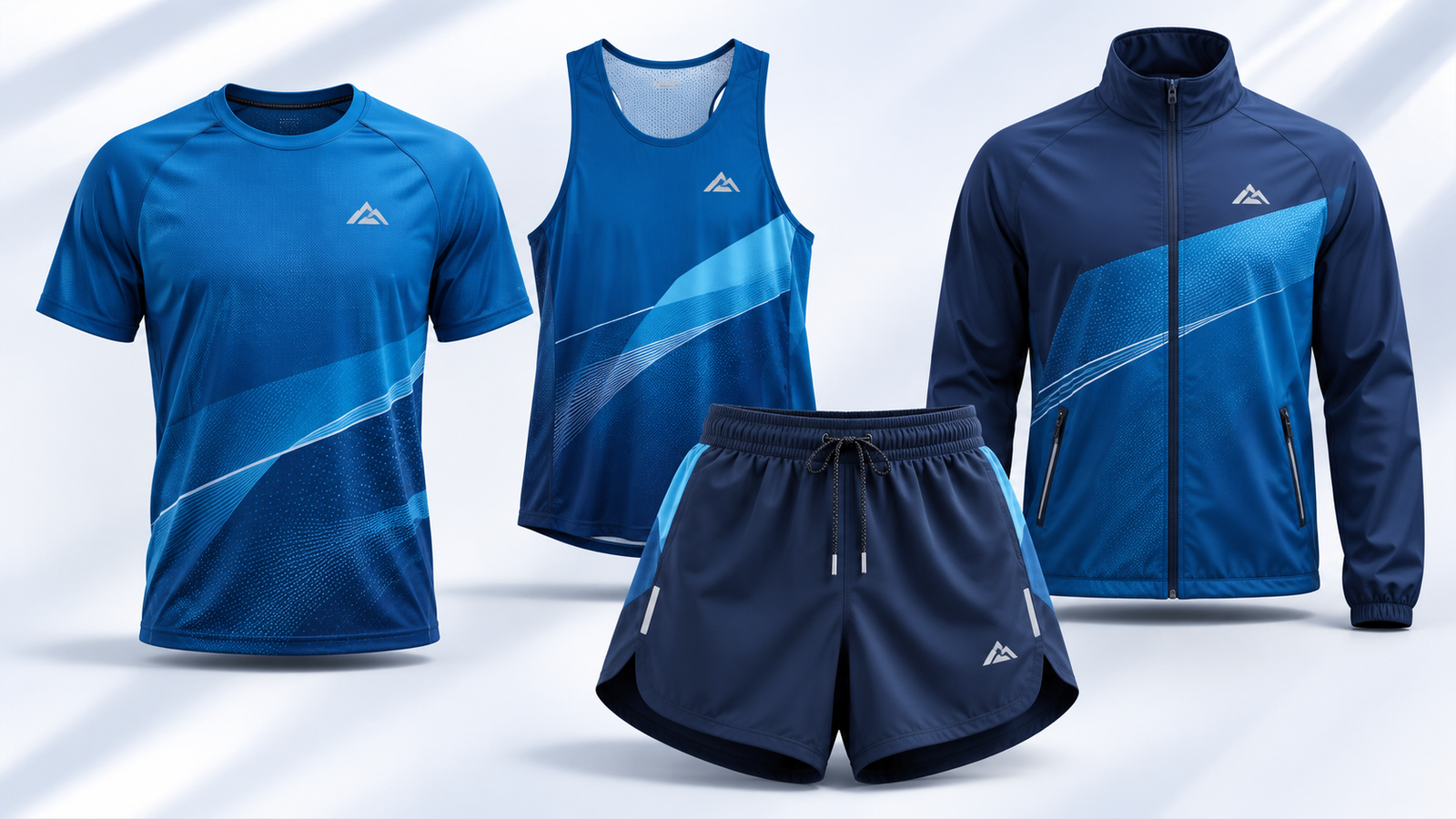
Performance T-shirt. A versatile choice for weekly sessions and first-time members. Specify whether the fit is athletic, regular or relaxed; check shoulder movement, body length and how the shirt behaves when damp.
Running singlet or tank. Useful for warm-weather racing and athletes who prefer an open armhole. Test armhole depth, chest coverage, neckline shape and rubbing near the underarm. Use a separate size chart for the singlet.
Running shorts. Consider a lightweight woven shell, waistband stability, an appropriate inseam and optional brief or longer inner liner. Confirm whether pockets are needed for training or whether a simpler design suits race-day use. A 5-inch and 7-inch short require separate fit review.
Optional off-track piece. A sweatshirt or casual tee can extend the visual identity to social meetups, but it should not consume the budget needed to get the core technical garments right.
An efficient launch might begin with a T-shirt and one shorts silhouette in matching colors. Add singlets, jackets or accessories after feedback shows there is demand. Coordinate colors and branding even when fabrics differ.
3. How Do You Choose Fabrics and Fits for Running Shirts and Shorts?
A fabric should be selected for the garment and the activity—not because a composition sounds premium. Polyester-based knits are common candidates for running tops; polyester-elastane or nylon-elastane woven fabrics may be considered for shorts. Construction, weight and stretch matter more than composition alone.
For shirts, compare candidates for air permeability, moisture movement, drying behavior, opacity and wash stability. For shorts, evaluate drape, abrasion points, stretch recovery and whether the shell restricts stride length. Support any quick-dry, cooling or UV claims with appropriate tests.
Fit checks should follow the real use case. Test tops during arm swing and repeated running, not only while a model stands still. Test shorts during running, squats and lunges. If using a liner, check how its seams and leg opening feel over time.
A clear factory brief should include a target wearer, intended climate, approved fabric swatch, fit reference and finished-garment points of measurement (POM). Record how each measurement is taken: flat or around the garment, relaxed or stretched where relevant. Consistent methods make size grading and bulk inspection much easier.
4. Which Printing Methods Work Best for Club Logos and Sponsor Artwork?
The right decoration method depends on fabric, artwork, order size and location. Select it before finalizing the garment pattern because some methods are easier on fabric panels before sewing, while others are applied after assembly.
| Method | Often suitable for | Main consideration |
|---|---|---|
| Dye sublimation | Multicolor or all-over designs on suitable light polyester fabrics | Fabric compatibility, color accuracy and panel alignment |
| Screen printing | Repeated graphics and spot-color logos | Setup per design/color, ink hand feel and stretch compatibility |
| Heat transfer | Smaller logos, names or complex graphics on compatible materials | Adhesion, edge durability, placement and washing tests |
No method is universally best. Request a decoration sample on the actual approved fabric, especially for stretchy garments, dark colors or designs that cross seams. Confirm artwork dimensions and distances from the neckline, side seam and hem; use measured placements rather than guesswork.
For race-day pieces, check whether an organizer's race bib will cover a chest logo or sponsor graphic. Keep branding visible while respecting event rules. A club's own name and logo should be original or properly licensed; do not reproduce an official race mark, sponsor logo or team crest without permission.
5. How Should Clubs Collect Sizes and Team Order Quantities?
Size problems often begin with the order form, not the sewing room. Before opening registration, ask the supplier whether its chart lists body measurements or finished-garment measurements. A unisex size label alone is not enough to predict how a specific running cut will fit.
If possible, provide a sample fitting day. Members can test the actual tee, singlet and shorts separately, then submit their preferred sizes. Keep a simple roster with a member or order ID, garment style, size, quantity and any approved personalization; collect only the personal data genuinely needed to fulfill the order.
Check the size totals twice before approval. A member ordering one tee in medium and one pair of shorts in large is perfectly normal. Do not copy shirt size allocations into shorts automatically. Separate adult, youth and gender-specific patterns.
If the club wants spare stock for late joiners, decide that quantity explicitly and budget for it. After confirming the roster, freeze sizes and artwork at an agreed deadline. Late changes risk added cost and delay.
6. How Do MOQ and Manufacturing Costs Affect a Club Apparel Order?
A low order quantity is helpful, but it needs to be understood correctly. MAIDA's published general MOQ is usually 50–100 pieces per design per color, with mixed sizes available; final minimums depend on materials, printing and construction.
Consider a hypothetical club ordering 50 performance T-shirts and 50 running shorts. The combined total is 100 garments, but they are two different styles requiring their own patterns, fabric calculations, cutting and assembly. They cannot automatically be treated as one 100-piece production line or assumed to share MOQ.
For an accurate quotation, ask for a breakdown covering shell and lining fabrics, special trims, artwork setup, packaging, sampling, production and shipping. Specify whether the quote is EXW or includes freight, duties and taxes. A lower unit price is not necessarily a lower delivered cost.
Control the first order by limiting unnecessary style-color combinations, using consistent branding placements where practical and approving one complete sample for each distinct construction. Confirm fabric minimums separately.
7. How Far Ahead of Race Day Should Clubs Order Custom Apparel?
Work backward from the date members must receive their kit—not merely the date of the race. Allow time for internal decisions, fit corrections, artwork sign-off, production, inspection and transport.
| Stage | What must be completed |
|---|---|
| Planning and quotation | Styles, quantity ranges, budget, fabric and logo files |
| Sampling and approval | Fit test, decoration sample, final measurements and signed artwork |
| Bulk manufacturing | Material allocation, cutting, sewing, decoration and quality control |
| Packing and shipping | Size-count check, carton labels, customs paperwork and delivery |
| Distribution buffer | Time for club sorting, local handout and unexpected delays |
MAIDA's public FAQ describes sample production as usually 5–7 working days after confirmed details and bulk production as usually 15–25 working days after approval. These are indicative production windows, not a guaranteed event-delivery commitment; sample revisions, custom materials, holidays, freight and customs can extend the schedule.
A race with a fixed date deserves a larger buffer than a casual merchandise release. Ask the manufacturer to provide a dated milestone plan and confirm the actual shipping option before collecting payments or promising a delivery day to members.
8. What Should Brands Send a Manufacturer Before Sampling and Reordering?
The easiest way to make a second order match the first is to document the first one properly. Keep an approved, version-controlled development file rather than relying on chat screenshots and memories.
Factory-ready running club apparel checklist:
- Product list, use case, quantities by style/color, requested delivery location and deadline.
- Front/back technical drawings, original artwork, approved color references and logo placements.
- Shell and liner fabric references, composition, weight and any supported performance requirements.
- Finished-garment size charts, measurement methods, grading rules and agreed tolerances.
- Neckline, waistband, pocket, liner, seam, label and packaging construction details as applicable.
- Sample version, sign-off record, quality checkpoints and a final size-by-style order matrix.
For reorders, archive fabric references, size charts, artwork versions, print settings, trims and sample photos. Ask whether the same fabric and colors remain available; a reorder after a material discontinuation may require fresh sampling. Put approved changes in a revised tech pack so the factory can distinguish an exact repeat from an updated version.
At MAIDA Activewear, we support OEM/ODM development across custom performance tees, tanks and shorts. Our role is to help turn a club's ideas into clear specifications and reviewable samples—not to assume that every club needs the same kit.
Frequently Asked Questions
What is the best first product for a new running club?
A performance tee is often the simplest starting point because it suits regular group sessions. Add shorts or singlets when the members' preferences, budget and order numbers support them.
Should race singlets and training T-shirts use the same size chart?
Not automatically. Different armholes, fits and fabric behavior mean each approved pattern needs its own finished-garment measurements and fit review.
Can a club combine 50 T-shirts and 50 shorts to meet a 100-piece MOQ?
Not by default. MOQ is usually assessed by design, color, material and production process. Ask the manufacturer to confirm each style separately.
Can the club reorder exactly the same kit next season?
Often, but exact matching depends on continued availability of fabric, color, trims and decoration processes. Save approvals and confirm substitutions before producing a repeat order.
How early should we order before a race?
Begin when you can still allow time for a sample revision, bulk production, shipping and distribution. Request a written calendar for your specific location and event instead of relying on generic lead-time claims.
Final Takeaway
A successful running club kit begins with wearer needs and accurate production records. Keep the range focused, approve fit and artwork, and protect the race deadline with a realistic buffer. Explore MAIDA's custom shorts or request a development quote.