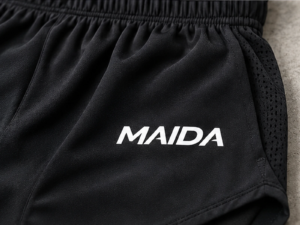
Your black gym shorts look perfect when the sample arrives. The white logo is sharp, clean, and exactly where it should be. But after a few days, the logo starts turning grey or pink. What went wrong, and could it happen across your bulk order?
White logos can turn grey or pink on black polyester gym shorts because of dye migration. Under certain heat and processing conditions, dyes from the fabric can move into the printed or transferred logo layer. To reduce this risk, brands should select compatible printing materials, consider dye-blocking solutions, control application conditions, and test the finished logo on the actual production fabric before approving bulk manufacturing.
At Maida Activewear, we treat this as a production approval issue, not simply a printing defect. Here is what brands should check.
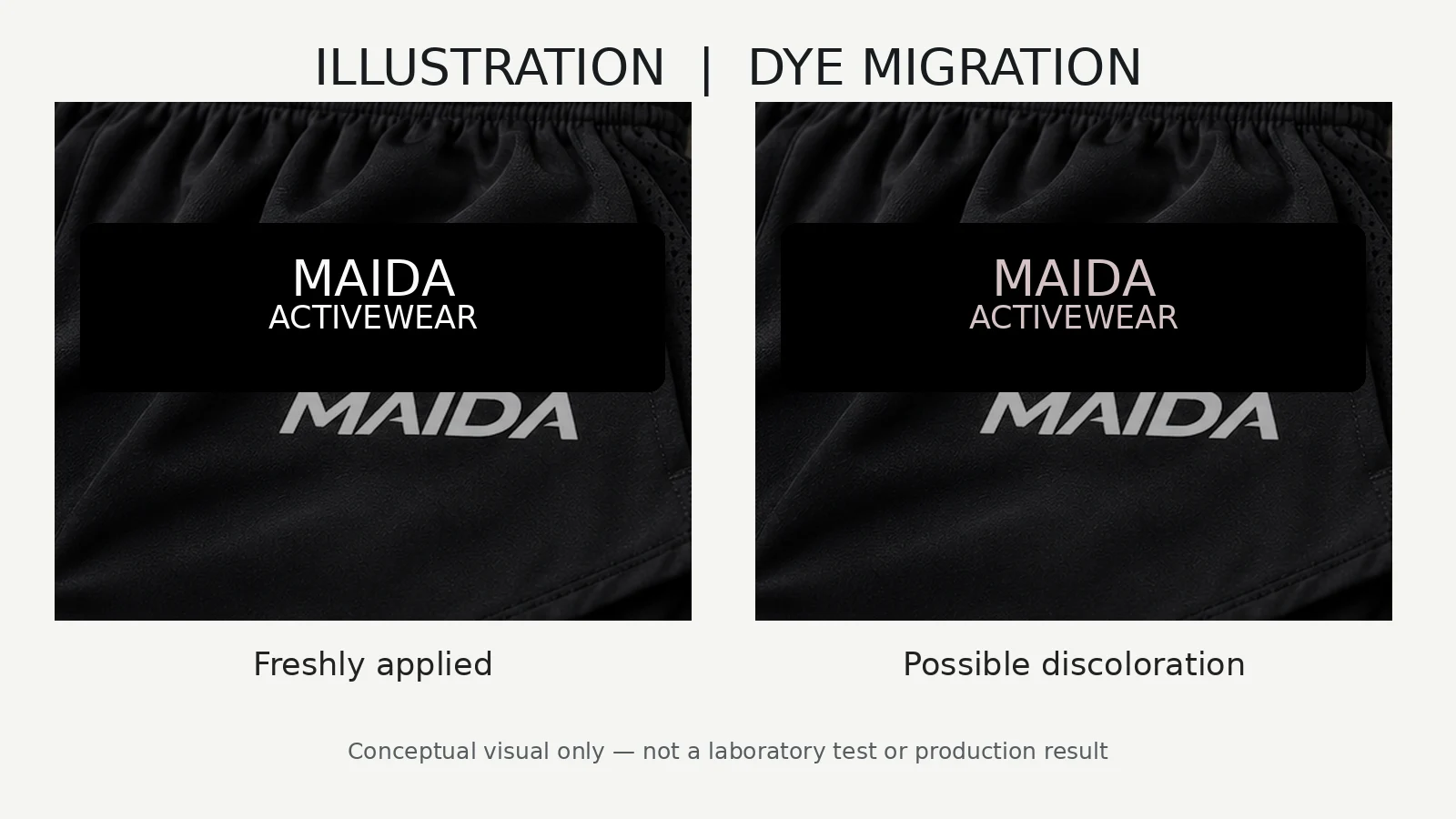
What Is Dye Migration in Sportswear?
Dye migration happens when colorants in a garment's fabric move into another material, such as a printed logo or heat-transfer layer.
It is particularly relevant to polyester performance apparel because the dyes used to color polyester can become mobile under certain conditions, including heat exposure.
Imagine applying a bright white logo to black training shorts. Immediately after pressing, the logo looks clean. Later, it develops a grey, pink, or reddish tint. The discoloration may indicate that dyes from the dark fabric have migrated into the lighter decoration.
How Do Fabric Dyes Transfer Into a White Logo?
Heat can encourage certain polyester dyes to move from the fibers into nearby printing materials. The result depends on the fabric's dye chemistry, the decoration material, processing conditions, and subsequent storage.
Importantly, not every grey-looking white logo is caused by dye migration. A thin print with insufficient opacity may allow the dark fabric to show through immediately. Dye migration, by contrast, may become more noticeable over time. Before choosing a solution, we recommend identifying which problem is actually occurring.
Technical guidance from Avient explains why bleed-resistant ink systems and controlled curing conditions matter when decorating polyester performance garments.
Why Are Black Polyester Gym Shorts More Vulnerable?
Polyester is widely used in athletic shorts because it can provide lightweight construction, durability, and quick-drying performance. However, some polyester dye systems present migration risks during decoration.
Does Polyester-Spandex Fabric Increase the Risk?
Polyester-spandex blends require attention to both color stability and stretch. The polyester component may carry dyes capable of migrating, while the spandex and stretch construction introduce additional requirements for the logo. A transfer that resists discoloration but cracks during movement is not a successful solution.
When developing stretch training shorts, we recommend checking logo color stability, stretch and recovery, adhesion to the selected fabric, and appearance after laundering.
Can Dye Migration Appear Days After Heat Pressing?
Yes. Some discoloration becomes visible only after the garment has cooled or been stored. A logo that looks perfect immediately after application may change in the following days. This is why checking only the freshly pressed sample can miss potential problems.
Stahls' technical guidance discusses discoloration that can appear hours, days, or even weeks after decorating polyester apparel.
Which Logo Application Methods Need Dye Migration Protection?
Heat Transfer Logos vs. Screen Printing
Heat transfers are commonly used for small logos, reflective graphics, and branding on performance apparel. However, their adhesives, films, and printed layers must be suitable for the fabric and application conditions.
Screen printing introduces different considerations, including ink formulation, curing temperature, opacity, and stretch compatibility. For polyester screen printing, low-bleed ink systems are one method of reducing migration risk. We recommend evaluating the complete combination rather than treating printing methods as interchangeable.
What Does an Anti-Migration Barrier Layer Do?
A dye-blocking barrier is designed to reduce the movement of fabric dyes into the visible decoration layer. Depending on the material system, the barrier may be incorporated into a heat transfer or used as part of a compatible printing process.
Some manufacturers offer specialized dye-blocking products for polyester and sublimated performance fabrics. However, a product labeled anti-sublimation or dye-blocking should still be tested against the actual production fabric. Its effectiveness may vary with dye chemistry, processing conditions, and the selected decoration.
How Can Brands Prevent White Logos From Turning Grey?
Choose Materials Compatible With the Fabric
Share the exact fabric composition, color, finish, and expected stretch requirements with the printing supplier. For black polyester gym shorts, ask whether the proposed ink or transfer is intended for dyed synthetic materials.
If necessary, compare a standard white decoration with a compatible low-bleed or dye-blocking alternative. Also consider how a thicker barrier layer might affect softness, appearance, and flexibility. The best solution should protect the logo without compromising the comfort or intended look of the shorts.
Control Heat, Pressure, and Application Time
Heat, pressure, and processing time influence transfer adhesion, print curing, fabric appearance, and potential migration. Lower-temperature materials can be helpful in certain applications, but temperature reduction is not a universal fix.
A transfer still needs the conditions required for proper bonding. Screen-printing ink still needs to cure according to its specifications. Reducing heat too far may replace discoloration with poor adhesion or undercured printing. We recommend following validated supplier instructions and documenting the approved production settings.
Test the Finished Logo Before Bulk Production
Whenever possible, decorate an actual sample of the selected shorts fabric. Check the logo immediately after processing and again after an appropriate observation period. Then evaluate stretching, laundering, and adhesion using a defined test procedure.
What Should Brands Approve Before Bulk Gym Shorts Production?
At Maida Activewear, we believe that a brand should approve more than the artwork and logo position. A white logo may look correct in a digital mockup while presenting problems on the actual garment. Before releasing an order, we recommend confirming the following details.
The Pre-Bulk Logo Approval Checklist
| Inspection Item | What to Confirm |
|---|---|
| Production fabric | Correct fiber composition, color, finish, and fabric reference |
| Logo method | Approved heat transfer, screen print, or alternative technique |
| Color and opacity | White coverage and absence of unwanted discoloration |
| Application settings | Documented temperature, time, pressure, or curing conditions |
| Delayed inspection | Appearance after a defined observation period |
| Stretch testing | No unacceptable cracking, peeling, or deformation |
| Wash testing | Acceptable color, adhesion, and appearance after laundering |
| Reference sample | Signed-off sample and specifications for production comparison |
IMAGE SLOT 2: Upload your own factory QC/photo to WordPress and insert an Image block here.
Gym Shorts Fabric and Logo Risk Matrix
| Fabric and Decoration | Potential Concern | Suggested Evaluation |
|---|---|---|
| Black polyester + white heat transfer | Dye migration | Test a suitable dye-blocking transfer |
| Polyester-spandex + white logo | Migration, stretching, and adhesion | Test color stability and elasticity |
| Sublimation-printed polyester + white transfer | Migration from underlying dyes | Evaluate specialized barrier materials |
| Cotton + white screen print | Opacity, curing, and wash durability | Validate the ink and curing process |
What Should Brands Do If the Sample Logo Already Shows Dye Migration?
If the sample shows discoloration, we recommend stopping the approval process until the cause has been investigated. First, document when the change appeared and whether the logo was discolored immediately after printing.
Next, review the fabric, transfer or ink material, and application conditions with the relevant suppliers. Depending on the findings, the solution may involve a different transfer, an appropriate barrier layer, revised processing conditions, or another decoration method.
Produce a corrected sample and repeat the agreed inspections. Do not assume a bulk order will perform better simply because larger-scale production equipment is used.
Frequently Asked Questions
Can dye migration happen even if the logo looks perfect at first?
Yes. Some dyes can migrate after the initial printing or heat-transfer process. Delayed inspection helps identify discoloration that is not visible immediately after application.
Are anti-sublimation heat transfers necessary for every black gym short?
No. The need depends on the fabric's dye system, transfer material, color, and processing conditions. Brands should evaluate the actual fabric rather than specifying a barrier automatically for every black garment.
Can lowering the heat-press temperature completely stop dye migration?
Not necessarily. Lower temperatures may reduce risk with compatible materials, but they do not guarantee prevention. The approved temperature must also provide sufficient adhesion or curing.
Can washing remove dye migration from a white logo?
Washing is not a dependable repair method. If dye has entered the decoration layer, ordinary laundering may not restore its original color. Prevention and correct material selection are preferable.
Should brands retest logos when changing fabric suppliers?
Yes. Even when fabric composition and color appear identical, different dye systems and finishing processes may affect decoration performance. A new fabric source should be evaluated before production approval.
Final Thoughts: Prevent Problems Before Bulk Production
Dye migration is easier to prevent during development than to correct after production. Before approving bulk gym shorts, make sure the fabric, logo materials, application process, and finished sample have been properly evaluated. A reliable manufacturing partner should help brands identify these risks early.
For brands developing performance apparel, Maida Activewear provides custom gym shorts manufacturing support, from material selection and sample development to bulk production.