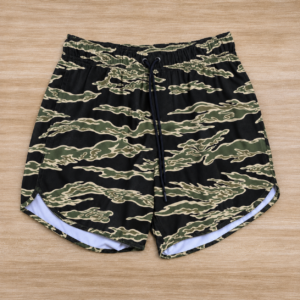
A pair of gym shorts can look perfect when a sample first arrives, yet develop problems after repeated washing. Shrinkage, fading, twisted waistbands, and peeling logos may lead to customer complaints and returns. For activewear brands, identifying these issues before bulk production is an important part of product development.
Gym shorts can fail after washing because of fabric instability, unsuitable dyeing or finishing, insufficient seam durability, or incorrect application of trims and heat transfers. Brands should evaluate dimensional stability, colorfastness, pilling resistance, logo durability, waistband recovery, seam integrity, and accessory performance. Testing finished garments under agreed washing conditions before bulk production helps identify quality risks and establish measurable acceptance criteria.
Understanding what causes these problems helps brands work more effectively with manufacturers and develop gym shorts that maintain their quality throughout regular use.
Why Can Gym Shorts Look Good Before Washing but Fail Afterwards?
Fabric Performance Is Not the Same as Finished Garment Performance
Fabric quality is important, but it does not determine the durability of an entire garment.
Gym shorts typically combine several materials and components, including outer fabric, elastic waistbands, sewing threads, pocket linings, zippers, drawstrings, and printed logos.
These components may respond differently to washing, drying, and repeated movement.
For example, a polyester-spandex fabric might maintain its dimensions while the waistband elastic loses recovery. Similarly, a fabric may pass a colorfastness test while a heat transfer logo begins peeling after washing.
This is why fabric testing and finished garment testing should be considered complementary processes.
Why One Perfect Sample Does Not Guarantee Consistent Bulk Quality
An approved sample confirms the intended design and construction, but bulk production introduces additional variables.
Different fabric lots, sewing adjustments, heat transfer settings, and accessory batches can affect product consistency.
Before production begins, brands should confirm which materials, construction methods, and testing requirements will apply to the bulk order.
Where practical, production-representative samples should be evaluated using the same materials and processes planned for manufacturing.
1. How Can Brands Test Gym Shorts for Shrinkage After Washing?
Why Polyester-Spandex Shorts Can Still Change Dimensions
Polyester-spandex blends are popular for training shorts because they provide stretch, comfort, and relatively good dimensional stability.
However, synthetic materials are not completely immune to dimensional changes.
Fabric construction, residual stresses from manufacturing, finishing processes, and washing conditions can all influence garment measurements.
Woven and knitted fabrics may also respond differently.
A small dimensional change can affect the fit of athletic shorts, particularly around the waistband, hips, and leg openings.
How to Measure Shorts Before and After a Wash Test
Brands should record key measurements before washing, including:
- Waist width in the relaxed position
- Hip width
- Front and back rise
- Inseam and outseam length
- Leg opening width
After washing and drying under defined conditions, the garment should be conditioned and measured again using the same measurement procedure.
The percentage change can be calculated as:
Dimensional Change (%) = (After Washing − Before Washing) ÷ Before Washing × 100
AATCC TM150 provides a method for evaluating dimensional changes in garments after home laundering, although the standard notes that it may not apply to certain stretch fabrics.
Brands should select suitable methods and agree on dimensional tolerances before testing.
2. Why Do Black Gym Shorts Fade or Transfer Color?
Understanding Color Change vs. Color Staining
Black is one of the most widely used colors in performance gym shorts, making consistent shade appearance especially important.
However, color-related problems can occur in different ways.
Color change refers to a difference in the original fabric shade after washing or exposure.
Color staining occurs when color transfers from one material onto another during washing or contact.
These issues should be evaluated separately.
The dyeing process, fiber composition, finishing treatment, and selected washing conditions can all influence colorfastness.
Wash Fastness and Rubbing Fastness Are Different Tests
ISO 105-C06 provides methods for evaluating resistance to color change and staining during laundering.
ISO 105-X12 addresses colorfastness to rubbing.
These tests evaluate different performance characteristics.
For gym shorts, areas around the inner thighs, waistband, and pockets may experience frequent rubbing during exercise.
Brands developing dark-colored or printed shorts should consider both washing and rubbing performance when establishing quality requirements.
3. Why Do Gym Shorts Pill or Develop Surface Damage?
Common Causes of Pilling in Performance Fabrics
Pilling occurs when loose fibers become entangled on a fabric surface, forming small visible balls.
The tendency to pill depends on several factors, including fiber characteristics, yarn structure, fabric construction, and mechanical friction.
Different polyester-spandex fabrics can therefore show different surface performance, even when their stated fiber compositions are similar.
Fabric abrasion, snagging, and pilling should not be treated as identical defects.
Each describes a different type of surface damage.
Areas That Deserve Extra Inspection
When evaluating training shorts, brands should pay particular attention to:
- Inner thigh areas exposed to repeated friction
- Seat areas that contact training benches or equipment
- Pocket openings and adjacent seams
- Areas where the fabric frequently rubs against itself
ISO 12945 provides standardized methods for evaluating fabric pilling, fuzzing, and related surface changes.
For products intended for gym training, laboratory results can be supplemented by practical garment inspections under conditions relevant to the intended use.
The goal is to understand how the material performs, rather than judge durability solely by how smooth a new sample feels.
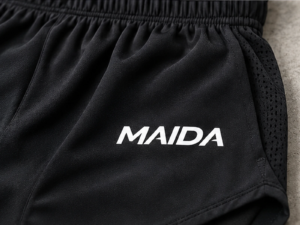
4. How Do Brands Test Heat Transfer Logos for Wash Durability?
Why Heat Transfer Logos Crack, Lift, or Peel
Heat transfer printing is commonly used for custom gym shorts because it can reproduce clean logos without significantly changing garment construction.
However, transfer durability depends on more than the appearance of the original print.
Important variables include transfer material compatibility, application temperature, pressure, dwell time, and fabric surface characteristics.
Incorrect application or unsuitable materials can contribute to lifting, cracking, or peeling.
Stretching during exercise may also place additional stress on printed areas.
How to Evaluate Logos After Repeated Washing
Brands should inspect printed logos before and after the agreed washing cycles.
Key observations include edge lifting, cracking, peeling, changes in appearance, and loss of adhesion.
Testing should use the actual production fabric and selected transfer material.
Where a logo is positioned on a highly stretchable part of the garment, stretch performance should also be considered.
The printing supplier's recommended application conditions and care instructions should be reviewed before approving the final process.
5. Why Do Elastic Waistbands Twist or Lose Recovery?
Fabric-Covered Elastic vs. Integrated Waistbands
A waistband may appear simple, but it often combines elastic, outer fabric, stitching, and a drawstring channel.
If the elastic is insufficiently secured inside a fabric-covered waistband, it may twist or roll during washing and wear.
Other problems can include uneven gathering, excessive tightness, or loss of elasticity.
Waistband construction should be selected according to the desired fit, fabric characteristics, and performance requirements.
What to Inspect After Washing and Stretching
During quality inspection, check whether:
- The elastic remains correctly positioned
- The waistband maintains an even shape
- The elastic recovers after stretching
- The drawstring channel remains functional
- The waistband shows twisting, rolling, or visible deformation
Brands should also verify that the waistband remains comfortable after washing.
A garment may retain its original dimensions while the waistband becomes less comfortable because of changes in elastic recovery or construction.
6. How Can Brands Prevent Seam Damage After Washing?
Common Stress Points in Gym Shorts Construction
Gym shorts are exposed to repeated stretching, bending, squatting, and directional movement.
Certain construction areas experience greater stress than others.
These commonly include the crotch seam, inseam, side slits, pocket openings, and waistband attachment points.
Seam durability depends on fabric properties, stitching type, thread selection, sewing tension, and construction quality.
A seam that appears neat on a flat sample may still perform poorly when subjected to repeated movement.
How to Check Stitching and Seam Integrity
Brands should inspect garments for broken stitches, skipped stitches, seam opening, excessive puckering, and distortion after washing.
Appropriate seam strength or seam performance testing may also be necessary, depending on the fabric and construction.
ASTM D1683 is one reference method for evaluating seam performance in woven apparel fabrics.
The chosen test must match the actual material and construction.
For performance shorts, visual inspection after laundering should be combined with functional movement checks where appropriate.
7. Do Zippers, Drawstrings, and Pocket Components Survive Washing?
Common Problems with Zippers and Drawstring Tips
Accessories are often overlooked during fabric-focused quality control.
However, zippers, drawstring tips, pocket linings, and attachment points can affect the usability and perceived quality of gym shorts.
Possible problems include difficult zipper operation, loose drawstring tips, distorted pocket openings, and damaged components.
These issues may become noticeable only after washing or repeated use.
Why Complete Shorts Should Be Tested as an Assembly
Individual accessory specifications are useful, but they cannot fully predict performance once those components are sewn into a garment.
For example, zipper operation may be affected by pocket construction or fabric distortion.
Brands should therefore inspect completed shorts after washing, checking both visual condition and functionality.
Testing the finished product helps identify interactions between components that individual material tests may not reveal.
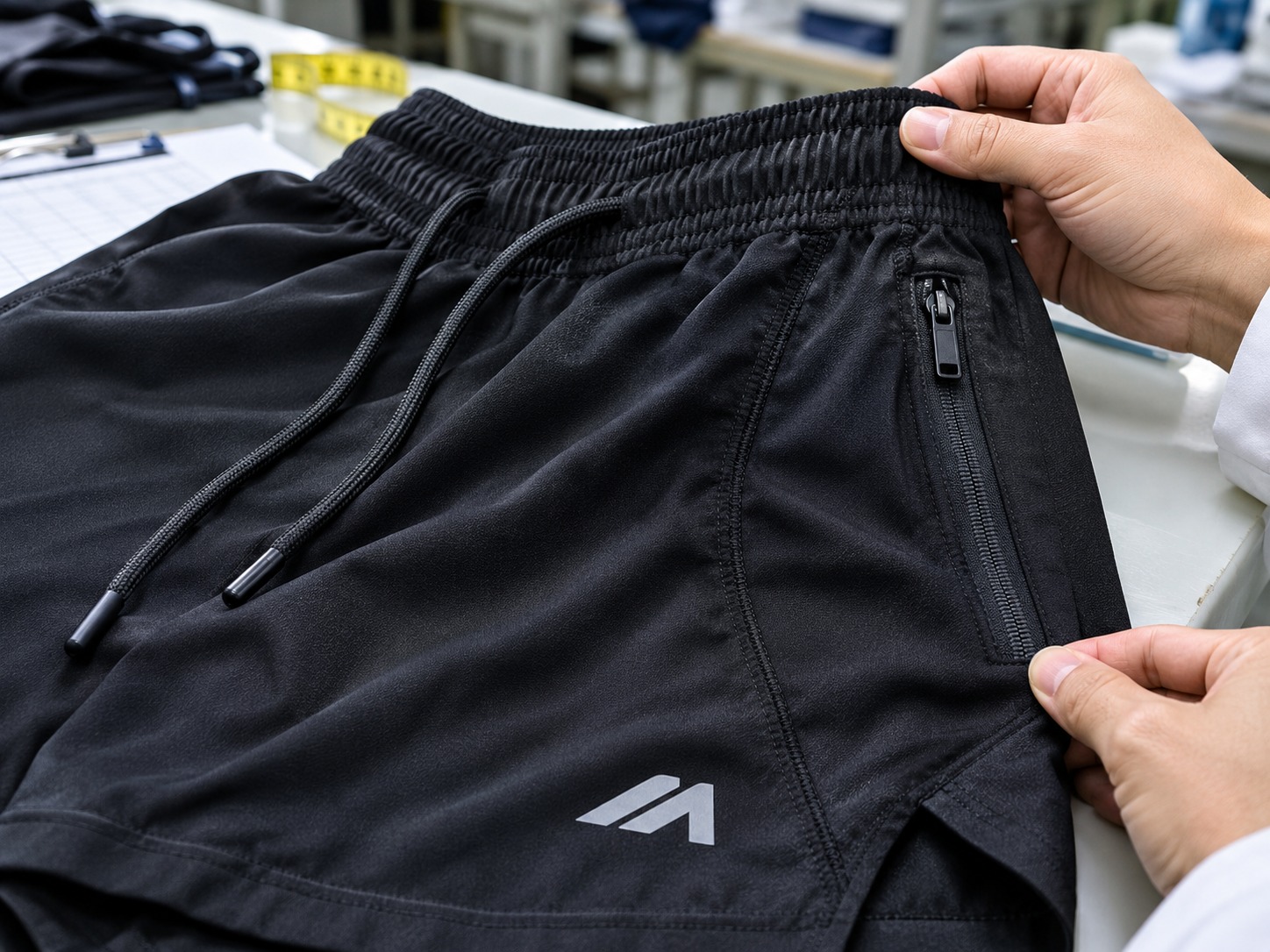
What Should Brands Include in a Pre-Production Gym Shorts Wash-Test Checklist?
A consistent inspection process makes it easier to compare samples and communicate findings with manufacturing partners.
The following checklist is designed as a practical product development reference rather than a substitute for accredited laboratory testing.
Record the Wash Conditions Before Evaluating Results
Before testing, record the garment size, fabric composition, fabric lot, sample identification, and any relevant construction details.
Also document the washing temperature, selected washing program, detergent, drying method, and number of washing cycles.
These conditions should reflect the agreed test objective and relevant care instructions.
Without consistent testing conditions, comparisons between samples may be misleading.
Original Gym Shorts Wash-Test Inspection Checklist
| Inspection Point | Before Washing | After Washing | Result |
|---|---|---|---|
| Waist, Hip, and Length | Initial measurements | Dimensional changes in cm / % | Pass / Review |
| Fabric Color | Approved original shade | Color change or staining | Pass / Review |
| Fabric Surface | Original surface condition | Pilling, abrasion, or snagging | Pass / Review |
| Heat Transfer Logo | Approved appearance | Cracking, peeling, or lifting | Pass / Review |
| Elastic Waistband | Original shape and recovery | Twisting or deformation | Pass / Review |
| Seams and Stitching | Approved construction | Broken stitches or seam damage | Pass / Review |
| Zippers and Drawstrings | Original functional condition | Damage or operating problems | Pass / Review |
Important: Pass or review decisions should follow previously agreed product specifications and acceptance criteria. The checklist does not establish universal quality thresholds.
What Should Happen When a Sample Fails?
When a test reveals a problem, the first step is to document the defect with photographs and measurements.
The manufacturer and brand should then investigate whether the cause involves the fabric, accessory, construction method, printing process, or testing conditions.
Any corrective action should be recorded and evaluated through appropriate retesting.
Updated specifications should be approved before the affected process is used in bulk production.
Frequently Asked Questions About Gym Shorts Quality Testing
How Many Wash Cycles Should Gym Shorts Be Tested For?
There is no single universal number of washing cycles that applies to every gym shorts product.
Brands should determine testing requirements based on garment materials, intended use, care instructions, and their own quality expectations.
The washing procedure and acceptance criteria should be agreed upon before testing begins.
Can Polyester-Spandex Gym Shorts Shrink After Washing?
Yes. Although polyester-spandex blends are generally dimensionally stable, finished garments can still experience dimensional changes.
Fabric construction, manufacturing processes, finishing treatments, and laundering conditions may influence the results.
Testing should evaluate the finished garment rather than relying on fiber composition alone.
Is Fabric Testing Enough Before Bulk Production?
No. Fabric testing helps assess material performance, but it cannot fully evaluate the completed garment.
Waistbands, sewing threads, heat transfer logos, zippers, and other components may behave differently during washing.
Finished garment testing helps identify these additional risks.
Should Brands Test Every Colorway Separately?
Testing requirements depend on the materials and processes involved.
Different colors may use different dyeing procedures, print applications, or finishing treatments.
Brands should evaluate these differences and determine whether separate colorway testing is necessary based on risk.
Who Should Approve Wash-Test Results Before Production?
The brand's designated product developer, quality manager, or authorized representative should review the results with the manufacturer.
Approval should include the test conditions, findings, acceptance criteria, and any required corrective actions.
A documented approval process helps maintain consistency during bulk manufacturing.
Final Thoughts: Test the Finished Shorts, Not Just the Fabric
Reliable gym shorts require more than attractive fabric and a well-fitting sample.
By evaluating washing performance, construction durability, and accessory functionality before bulk production, brands can identify potential defects earlier and establish clearer quality expectations with their manufacturers.
For additional product development guidance, explore our custom gym shorts manufacturing solutions and our guide to designing shorts for hybrid fitness training.