Skip to content

A gym shorts sample can look perfect in a photograph and still fail during a squat, after washing, or when the pockets are filled. Before placing a bulk order, brands need a way to review the sample that a factory can actually measure and reproduce.
Custom gym shorts samples commonly need revisions because fabric, measurements, waistband construction, crotch shape, pockets, liners, stitching, or branding were not fully specified or tested. The solution is to review each detail against an agreed tech pack, wear-test the shorts, record measurable corrections, and approve a final sample with controlled specifications before bulk production. A good-looking prototype alone does not prove that every size or production batch will match.
Here are ten practical checkpoints for private-label brands developing woven training shorts, running shorts, or two-in-one gym shorts.
Why Can a Simple Pair of Gym Shorts Require Several Sample Rounds?
Shorts have fewer visible parts than a jacket, but their fit depends on several connected decisions. A fabric substitution can also change drape and stretch, even with the same paper pattern.
A prototype, fit sample, size set, and pre-production sample serve different purposes. Some straightforward styles need fewer rounds, while new constructions may require more. The important question is not “How many samples?” but “What has this sample actually proven?”
1. Is the Product Brief Specific Enough to Make a Sample?
“Black gym shorts with a premium fit” is a direction, not a manufacturing specification. Before cutting fabric, define the intended activity, silhouette, shell fabric, inseam, lining, waist construction, pocket layout, side vents, artwork, and target sizes.
If you send a reference garment, mark which features to retain and which to change. For instance, you might want its overall fit but a different pocket system. Without those boundaries, a maker could reasonably interpret the reference differently from the designer.
A useful brief also names the sample's purpose: Is this version testing the fit, construction, fabric, or finished branding?
2. Does the Sample Use the Intended Fabric?
Fiber percentages do not describe an entire textile. Two polyester-spandex fabrics can have different weave, weight, stretch direction, surface finish, opacity, and recovery. The same pattern can behave differently in each.
Record the fabric reference, composition as verified by the supplier, GSM, weave, usable width, color reference, stretch direction, and any finish that matters. Compare a physical swatch with the garment; screen color alone is unreliable for shade approval.
Sometimes an early prototype uses substitute fabric to examine proportions. That can be useful, but it cannot approve the final hand feel, stretch, shrinkage, or color. Before final sign-off, confirm the production-intended material and any required fabric checks. For example, ISO 6330:2021 describes domestic washing and drying procedures, while ISO 5077:2007 addresses measurement of dimensional change. Neither automatically sets a universal shrinkage limit for all shorts.
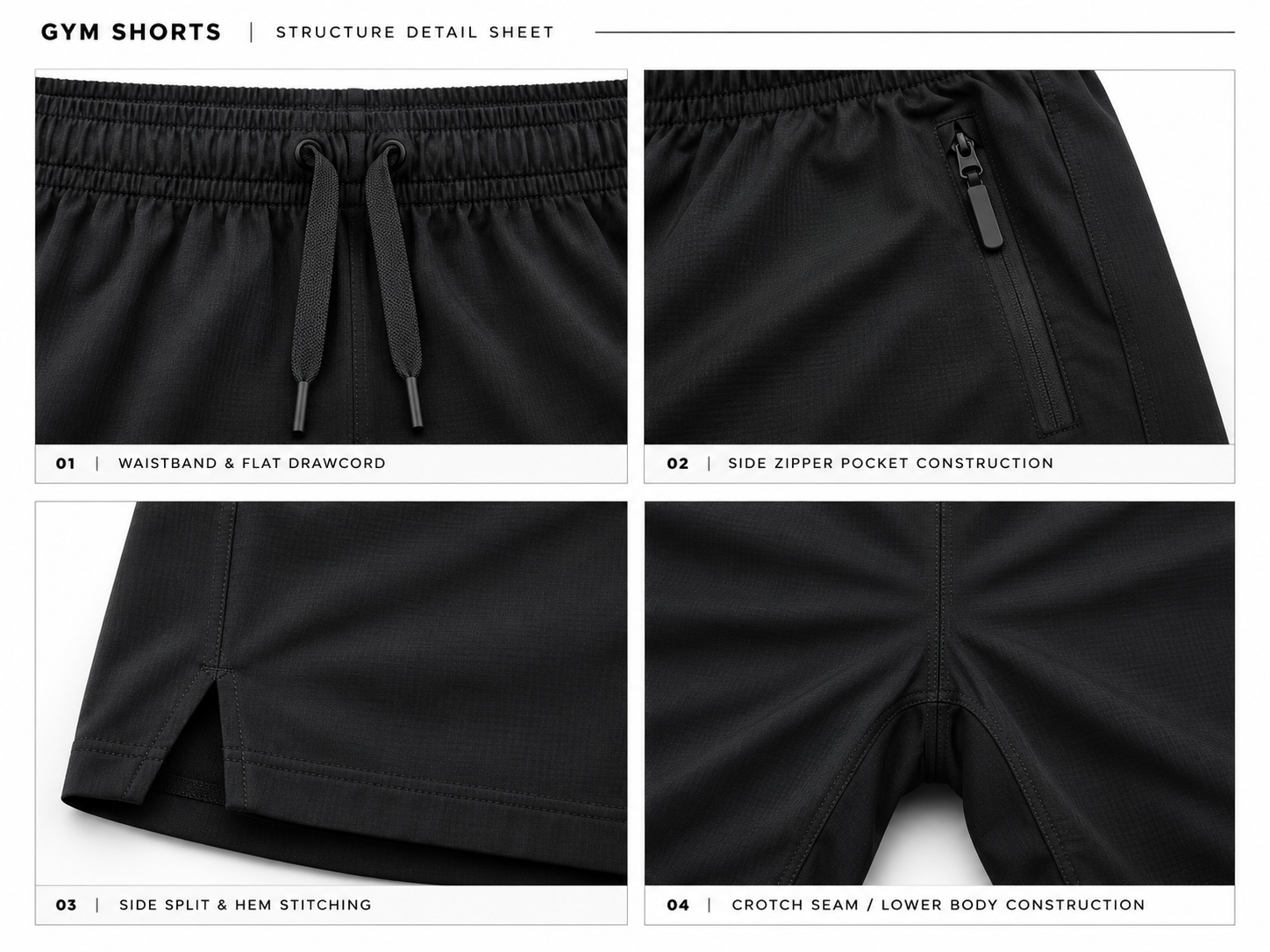
3. Are the Waistband and Drawcord Built as Specified?
Waistband complaints often sound subjective: “too tight,” “too bulky,” or “it rolls.” Turn them into construction questions. Is it a self-fabric waistband, fabric-covered elastic, or another design? What are its finished height, elastic width and tension, drawcord length, exit position, and attachment method?
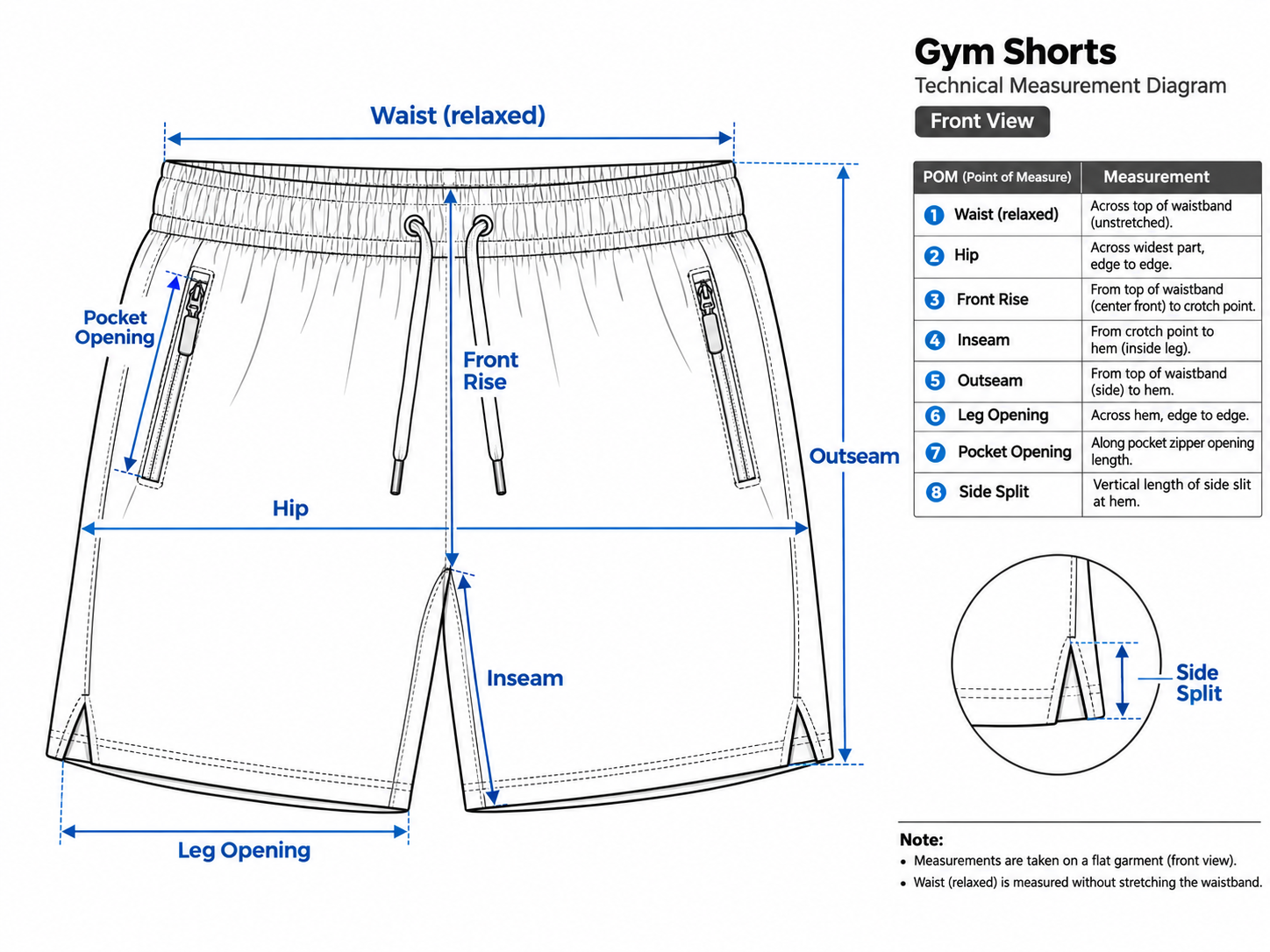
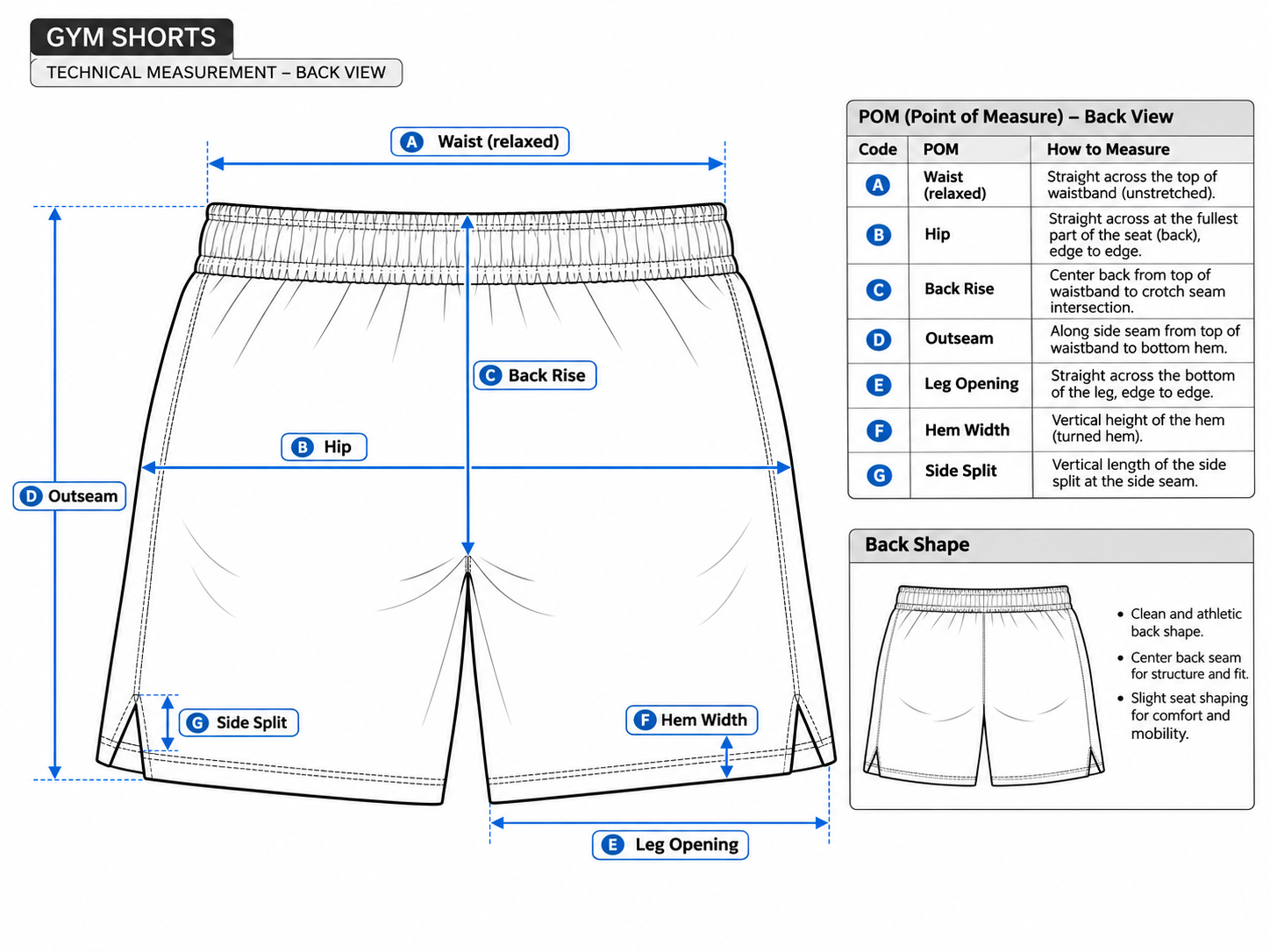
Distinguish the relaxed waistband measurement from a stretched measurement and from the wearer's body waist. State whether the measurement is the flat width or full circumference.
During fitting, test walking, squatting, bending, and tightening the drawcord. Check whether the elastic twists, the cord ends move unevenly, or a zipper pull presses against the waist. Inspect again after an agreed wash procedure.
4. Do the Front Rise, Back Rise, and Crotch Shape Work Together?
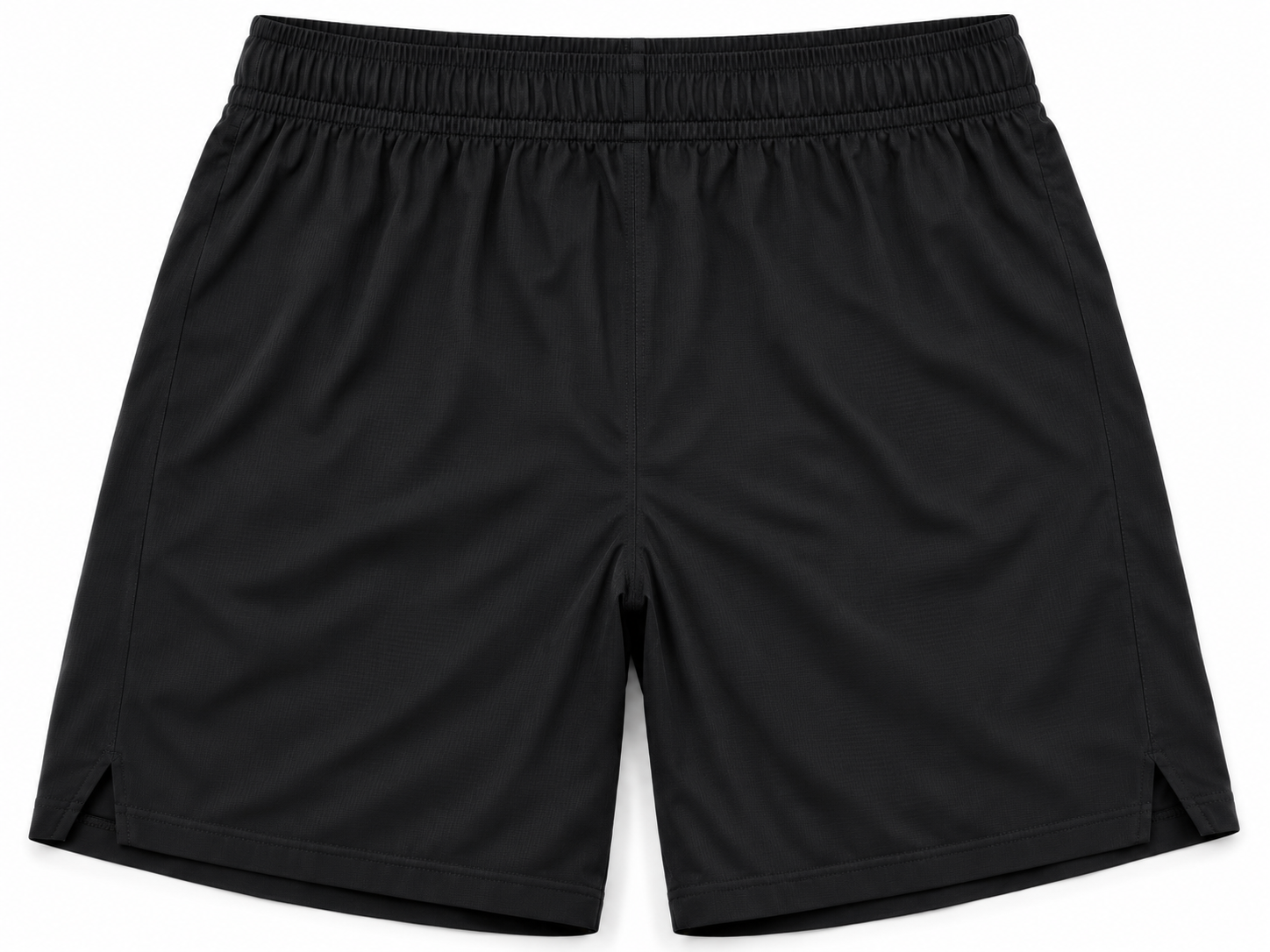
Inseam length gets attention, but crotch balance often determines whether shorts feel right during movement. A front rise that feels acceptable while standing may pull during a squat. Too little back-rise coverage can make the waistband drop when bending forward.
Measure front rise, back rise, hip, thigh, and crotch extension using agreed points of measurement. Review the shape on a wearer, not only on a table. Have the wearer squat, lunge, jog, and step up; watch for pulling lines, excess fabric bunching, or restricted movement.
A gusset is an option, not an automatic solution. Its geometry, fabric direction, and seam positions must work with the original pattern.
5. Are Inseam, Outseam, Leg Opening, and Side Splits Consistent?
A “7-inch short” should specify whether seven inches means the finished inseam and exactly where that measurement starts and ends. Outseam is a separate measurement; waistband height and rise influence how the short looks on the body.
Confirm inseam, outseam, hem opening, and side-split length on the same finished sample. A wider leg opening may suit a relaxed style but look wrong on an athletic-tapered silhouette. A longer side slit can increase mobility while also changing coverage and how the hem hangs.
Check left-to-right symmetry and whether the hem remains level when worn. Avoid solving a proportion problem merely by changing one number without reviewing the complete pattern.
6. Do the Pockets Actually Work During Training?
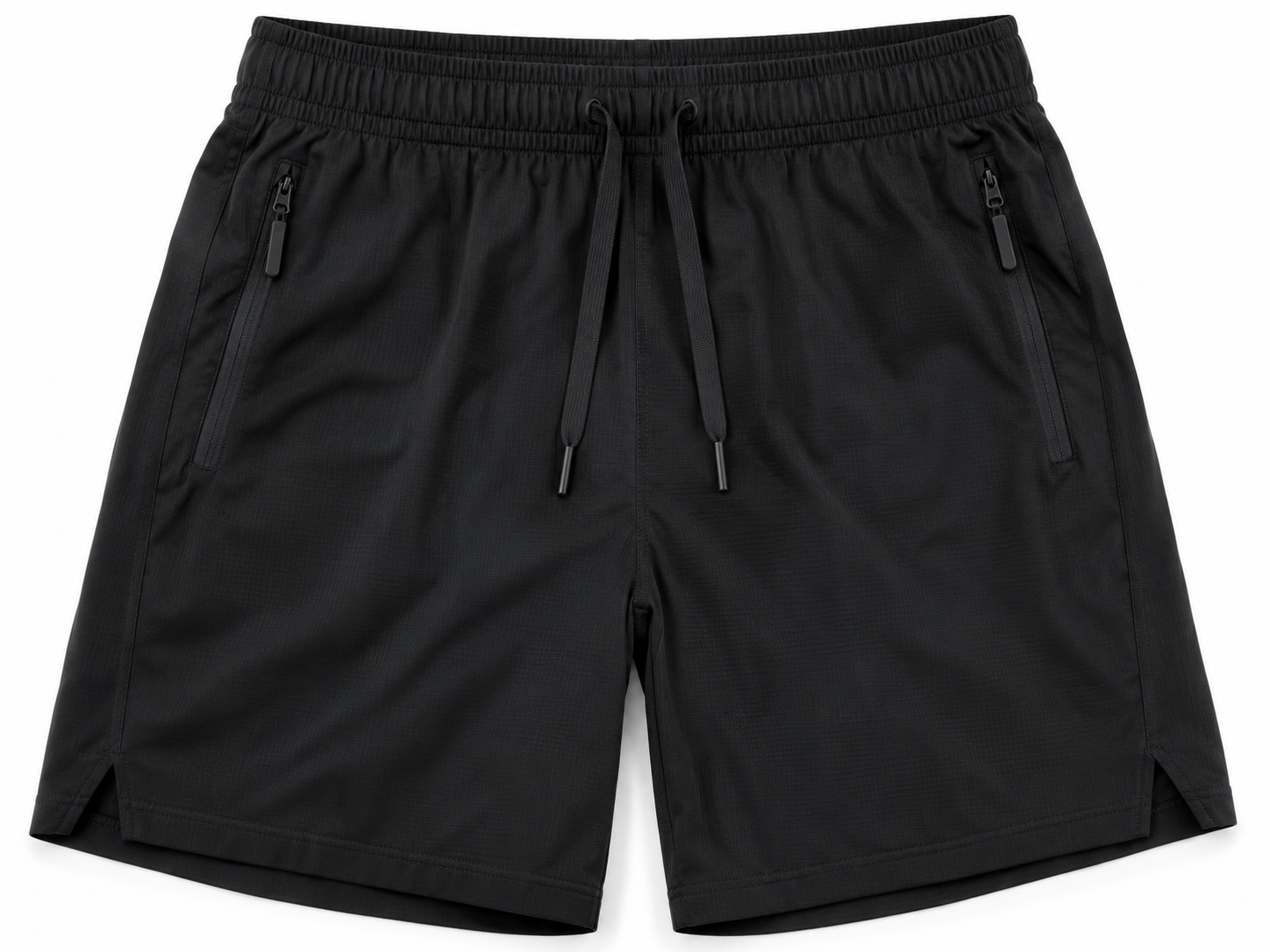
Decide whether the style needs ordinary side pockets, zippered side pockets, a hidden inner pocket, or a pocket integrated into a liner.
Specify opening length, bag depth and width, zipper type, zipper-pull orientation, reinforcement, bag fabric, and where the bag is anchored. Test with the objects people will carry—a phone, keys, or cards—rather than testing an empty pocket alone.
For zip pockets, inspect the full zipper path, corner puckering, seam bulk, and whether the pull can be operated with one hand. A pocket bag that is too large may swing; one that is too shallow may fail its basic purpose. Confirm the same construction appears in the revised sample and tech pack.
7. Is the Liner or Mesh Panel Defined Separately?
A two-in-one short is effectively two garments that must move together. The outer shell and compression liner need separate material, length, stretch, leg-opening, and attachment specifications. A liner can ride up, show below the shell, or create pressure at the thigh even when the outer short fits correctly.
Wear-test it through squats and running, and confirm whether a phone pocket on the liner remains stable. If the design includes a lightweight mesh crotch or back panel instead, clarify the panel boundaries, fabric weight, opacity, seam location, and stretch behavior.
It may change ventilation or construction, but it does not necessarily provide support or coverage. Specify what the panel is meant to achieve.
8. Are the Seams, Hem, and Finishing Suitable for Movement?
A sample can match every measurement and still be uncomfortable. Inspect stitch type, seam allowance, thread, seam placement, hem finish, and the feel of seams against skin. Stretch woven fabric needs a construction that accommodates intended movement without popping stitches or producing excessive waviness.
Check side splits, crotch intersections, pocket openings, and other loaded areas. Look for skipped stitches, loose threads, twisted seams, puckering, or uneven hems. Where a product uses bonded or heat-applied details, their appearance alone does not prove wash durability or suitability for the fabric.
Perform practical movement and wash checks, and agree when formal seam-strength or durability testing is appropriate.
9. Are Logos, Labels, and Trims in the Correct Position?
“Small logo on the left leg” leaves room for expensive interpretation. Provide the artwork file, print or transfer method, finish, exact dimensions, orientation, and reference edges for placement. If the logo should remain level rather than follow a diagonal seam, say so explicitly.
Use fixed reference points such as distance from the side seam and finished hem. Ask for a print or transfer sample when the chosen process and fabric combination have not been verified.
Confirm main label, size label, care label, drawcord tip, zipper color, and packaging. These small details belong to the approved bill of materials, not a separate last-minute message.
10. Have You Checked Grading and Frozen the Final Sample Version?
A perfect size Medium does not prove that Small or XL will fit. Grading changes the pattern relationships between waist, hip, rise, thigh, leg opening, and inseam. Review the full measurement chart, and use a size set or selected risk-size samples when the style warrants it.
Before approval, match the physical PPS to the dated tech pack, size chart, material list, artwork and labels; record any substitution.
Approval should be explicit: Approve, Revise and Resample, or Hold until a named issue is resolved. A photograph or casual “looks good” reply is not sufficient evidence for every technical decision.
How Should Brands Send Sample Corrections to a Factory?
Write the sample version and size, the exact location, the target, the measured result, and the requested action. Include marked photographs and use one consolidated revision sheet so conflicting messages do not reach the pattern maker or production team.
| Checkpoint | Agreed target | Sample finding | Correction request |
|---|---|---|---|
| Relaxed waist, measured flat | 39 cm | 41 cm | Review waistband/pattern; target 39 cm |
| Inseam, size M | 17.8 cm | 19.3 cm | Shorten by 1.5 cm; recheck hem balance |
| Zipper-pocket opening | 14 cm | 12 cm | Increase opening to 14 cm |
| Left-leg logo width | 40 mm | 50 mm | Reduce artwork to 40 mm |
Illustrative values only. These are not MAIDA customer measurements, standard size specifications, or universal tolerances.
Avoid “make it more premium” or “fix the fit.” If the cause is unclear, describe the observed problem and ask the pattern maker to propose a correction before changing the pattern. Keep a change log: V1 finding → V2 action → result → final approval.
What Must Be Approved Before Bulk Cutting?
A sensible pre-production gate includes four checks: fit, materials and construction, size/branding documentation, and bulk readiness. Test the intended activity, inspect a washed sample where appropriate, and match the production documents to the approved garment.
Use this buyer checklist:
- Approved sample version and current tech pack match.
- Fabric, colors, trims, pocket bags, liner or mesh, and labels are identified.
- Points of measurement, measuring methods, grading, and tolerances are agreed.
- Waistband, rise, leg opening, pockets, and movement fit have been tested.
- Logo artwork, application method, dimensions, and placement are confirmed.
- Required wash, performance, and compliance evidence has been reviewed.
- Open issues have written decisions; no undocumented substitutions remain.
- Any required production-lot checks and first-piece inspections are planned.
A PP sample is a reference, not a guarantee that every bulk piece will be identical. Incoming material checks, in-line inspections, and final-garment quality control remain necessary.
Frequently Asked Questions
How many samples should a new gym shorts brand make?
There is no fixed number. A simple style with existing materials may need fewer revisions than a new liner, pocket, and waistband system. Define what each sample must prove, and budget for correction and shipping time.
Can I start with reference photos instead of a tech pack?
Yes, photos can communicate direction, but they do not settle measurements or hidden construction. Provide a reference garment or clear annotated pictures, and develop a controlled specification before final approval.
Should a second sample be free if the first one is wrong?
That depends on the agreed development terms and the cause of the error. Distinguish a factory deviation from an approved specification from a buyer-requested design change, and agree on resampling costs in writing.
Is an approved sample enough to start bulk production?
Only when it is the right approval sample and its accompanying documents are complete. Confirm final materials, sizing, construction, decoration, outstanding corrections, and any required production controls before authorizing bulk cutting.
Final Thoughts
The goal is a garment the factory can reproduce. Record measurable decisions, test real movement, and approve the exact version intended for production. Explore MAIDA custom gym shorts or contact our team.